
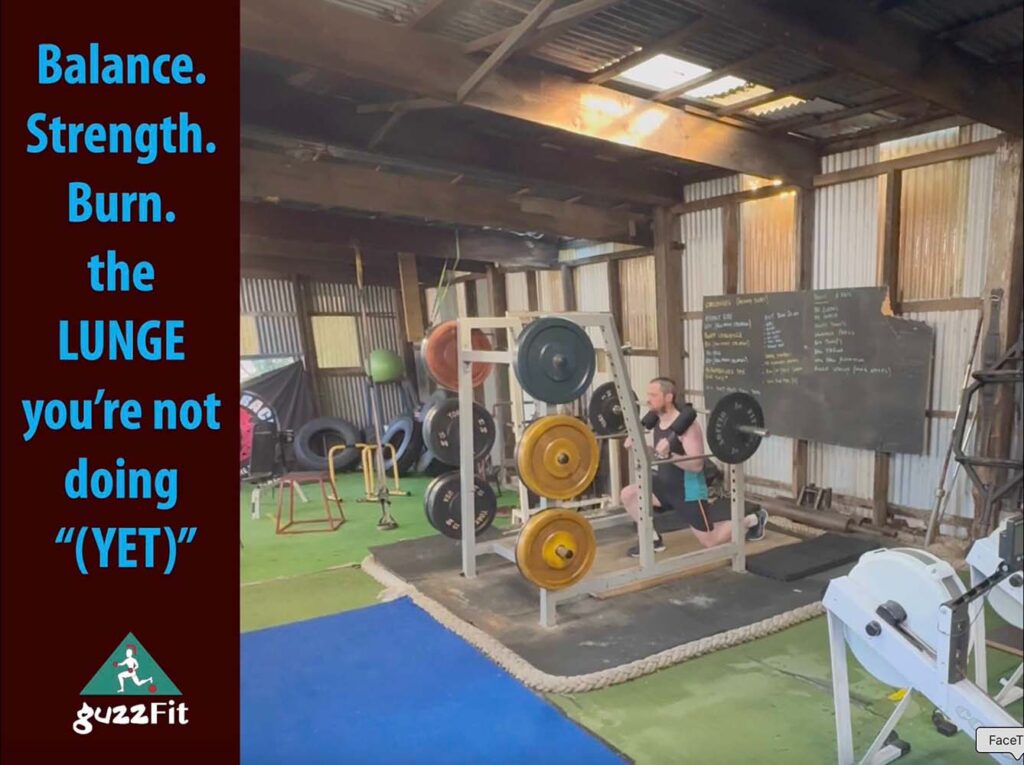
Single Leg Reverse Lunge Training in Traralgon
Single leg reverse lunges build glute strength, improve balance and enhance unilateral lower-body control.
By stepping backward, this variation increases hip engagement while reducing knee stress compared to forward lunges.
At guzzFit , this movement is programmed within structured strength training in Traralgon to develop stability, coordination and long-term resilience.
Why Reverse Lunges Improve Stability
Unilateral exercises expose imbalances between legs and strengthen stabilising muscles.
Most real-world and athletic movements occur one leg at a time — making this pattern highly functional.
Benefits include:
• Increased glute activation
• Improved balance and coordination
• Reduced anterior knee stress
• Enhanced hip stability
• Greater single-leg strength
Shifting load into the hips reinforces posterior chain development while improving joint control.
Technique and Progressive Overload
Maintain an upright torso and step backward under control.
Lower until both knees approach 90 degrees, then drive through the front heel to return to standing.
Progression can include:
• Dumbbells
• Barbell loading
• Tempo control
• Increased volume
The goal is not speed — it’s control and consistency.
🧠 Technique over ego
Most people rush single-leg work and lose balance.
We build control first — so strength actually transfers.
Structured Strength Training in Traralgon
At guzzFit , reverse lunges are programmed within structured lower-body training cycles — not used randomly.
They are often paired with:
• Romanian deadlifts
• Squat variations
• Core stability work
• Glute activation drills
Learn how this fits into a full system with Personal Training Traralgon
The objective is simple:
Better movement. Stronger legs. Long-term joint health.
Start With Structure
If you want to build strength, improve balance and move better, the first step is simple.
👉 Start your FREE 60-minute trial session
👊 Results. Community. Confidence. That’s guzzFIT
🎯 No guesswork. No random workouts. Just structure.


