
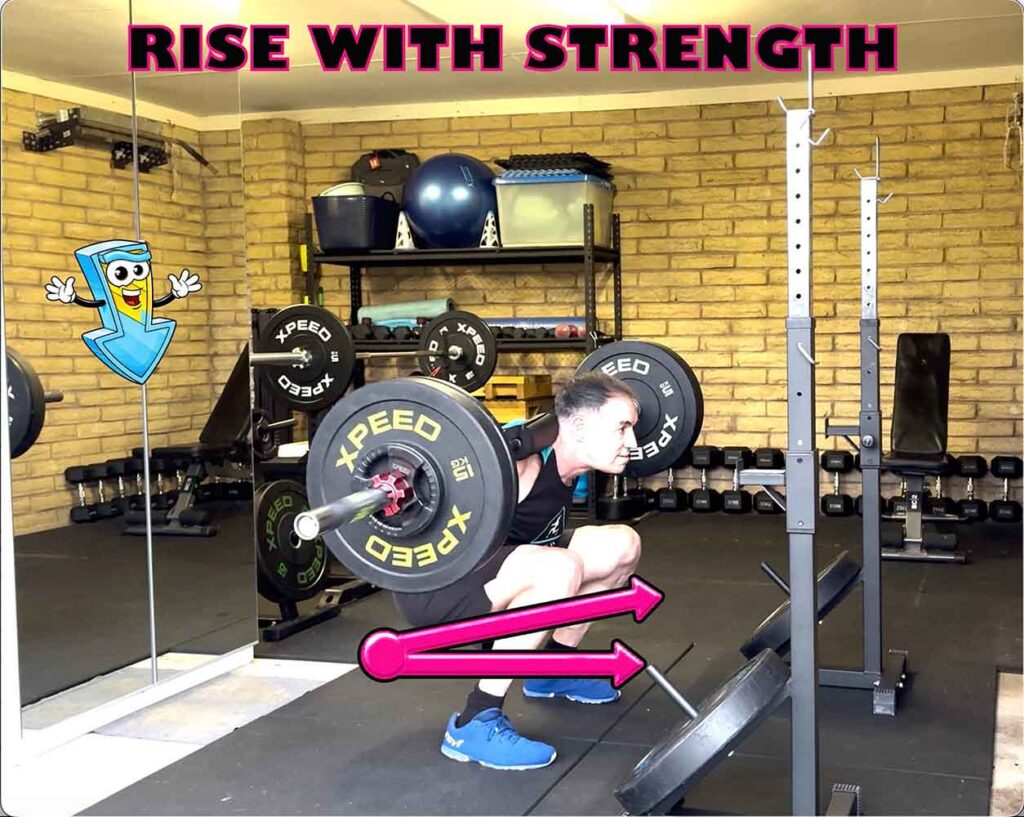
A well-performed squat offers an enormous return from one fundamental movement. It develops the pattern used to sit, stand, lift and move through everyday life while bringing multiple areas of the body together in one coordinated action.
However, effective squat depth is not achieved by forcing the body into a predetermined position. It is prepared and developed through mobility, control, sound technique and appropriate progression.
What Does Full-Depth Squatting Mean?
Full depth does not mean that everyone must reach exactly the same position.
Individual proportions, joint mobility, training experience and movement control all influence the depth a person can use comfortably and confidently. The goal is to work through your deepest technically sound range while maintaining balance, control and an appropriate body position.
A useful squat range should be earned progressively—not pursued at the expense of technique.
Why the Squat Delivers Such a Strong Return
A controlled squat requires the thighs, glutes, hips, trunk and ankles to work together. Rather than training one area in isolation, it develops coordination across a movement pattern with considerable everyday relevance.
A well-structured squat can help develop:
- Lower-body strength
- Trunk stability
- Ankle and hip control
- Balance and coordination
- Confidence when sitting, standing and lifting
- A stronger foundation for other exercises
The value comes from the combination of muscles, joints and movement skills involved in every controlled repetition.
Prepare the Range—Don’t Force It
Squat depth is influenced by more than effort. Limited ankle movement, insufficient hip preparation or a poorly established stance can all affect the position a person can control.
Purposeful preparation may include:
- Ankle mobility suited to the individual
- Hip mobility and activation
- Establishing a stable foot position
- Practising an appropriate squat stance
- Learning to brace the trunk before moving
- Rehearsing the movement without excessive load
Preparation should relate directly to the movement being trained. The aim is not to perform a collection of random stretches, but to improve the positions and control required for a sound squat.
Technique Comes Before Additional Load
Adding weight only becomes productive when the underlying movement remains controlled.
A technically sound repetition should maintain a stable stance, coordinated knee and hip movement, an appropriately braced trunk and control throughout both the lowering and rising phases.
Training load should allow these standards to remain consistent. If technique changes substantially as weight increases, the load may no longer suit the purpose of the session.
Progress can then be developed through appropriate changes to range, control, repetitions, volume or resistance.
Build Strength Through Your Best Available Range
The strongest squat is not necessarily the deepest position someone can reach once. It is the range they can control repeatedly and develop progressively.
At guzzFit , squat training is adjusted to the individual. Mobility, technique, strength and training experience are considered so that each person can work towards a stronger and more useful movement pattern.
This approach reflects the broader guzzFit MOVE philosophy: training should be structured, measurable and purposeful.
Learn more about the guzzFit approach to strength training on our MOVE page.
Want to build your strongest squat safely and progressively?
Book your Complimentary Results Assessment at guzzFit in Traralgon.


