Lower back soreness often doesn’t actually start in the lower back.
In many cases it develops because the hips and glutes become tight, usually from prolonged sitting, limited movement, or poor lifting mechanics. When the hips lose mobility, the lower back often compensates.
Over time that compensation can create persistent tightness or discomfort.
One simple way to begin reducing this tension is by using a foam roller to release the glute muscles.
At guzzFit , mobility work like this is combined with structured strength training so improvements in movement translate into long-term results.
Research into foam rolling, often referred to as self-myofascial release, shows that it can improve joint range of motion without negatively affecting muscle performance.
Why the Glutes Affect the Lower Back
The glutes play a major role in controlling hip movement and stabilising the pelvis.
When these muscles become tight or inactive, the lower back often takes on more load than it should.
This is why many people feel soreness in the lower back even though the real issue begins around the hips.
Improving mobility through the glutes can help restore more comfortable and balanced movement.
Two Foam Rolling Techniques That Can Help
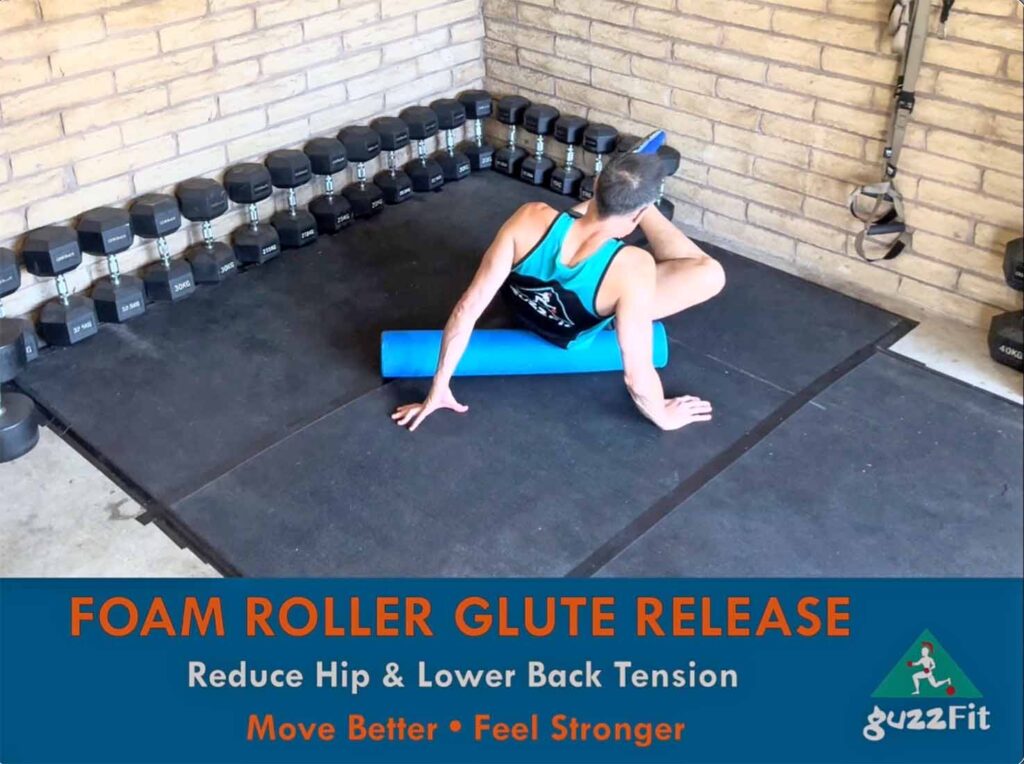
The video above demonstrates two common areas where foam rolling can help reduce tension that contributes to lower back soreness.
1. Glute Release
The first technique focuses on releasing tension through the main glute muscles.
Rolling slowly across this area can help reduce muscular tightness and improve circulation through the hips.
When the glutes move more freely, the lower back often experiences less strain during everyday activities and training.
2. Deep Glute Release
The second technique targets a small muscle deep in the glute region called the piriformis.
When this muscle becomes tight it can contribute to tension through the hip and surrounding tissues, which may affect the lower back.
Gently foam rolling this area can help reduce muscular tension and improve hip mobility.
Foam Rolling Is Only the First Step
Foam rolling can help reduce tension and improve movement through the hips, but it rarely solves the problem completely on its own.
Lasting change comes from reinforcing that mobility with strength and control.
Lower back soreness often improves most when mobility work is combined with structured strength training that restores balanced movement patterns.
Working with a Personal Trainer Traralgon locals trust can help identify the movement patterns contributing to lower back tension and build a program that improves both strength and mobility.
Move better. Feel stronger. Stay capable.
That is guzzFit .
Ready to experience structured coaching for yourself?
Book your Complimentary Results Assessment today with guzzFit


