
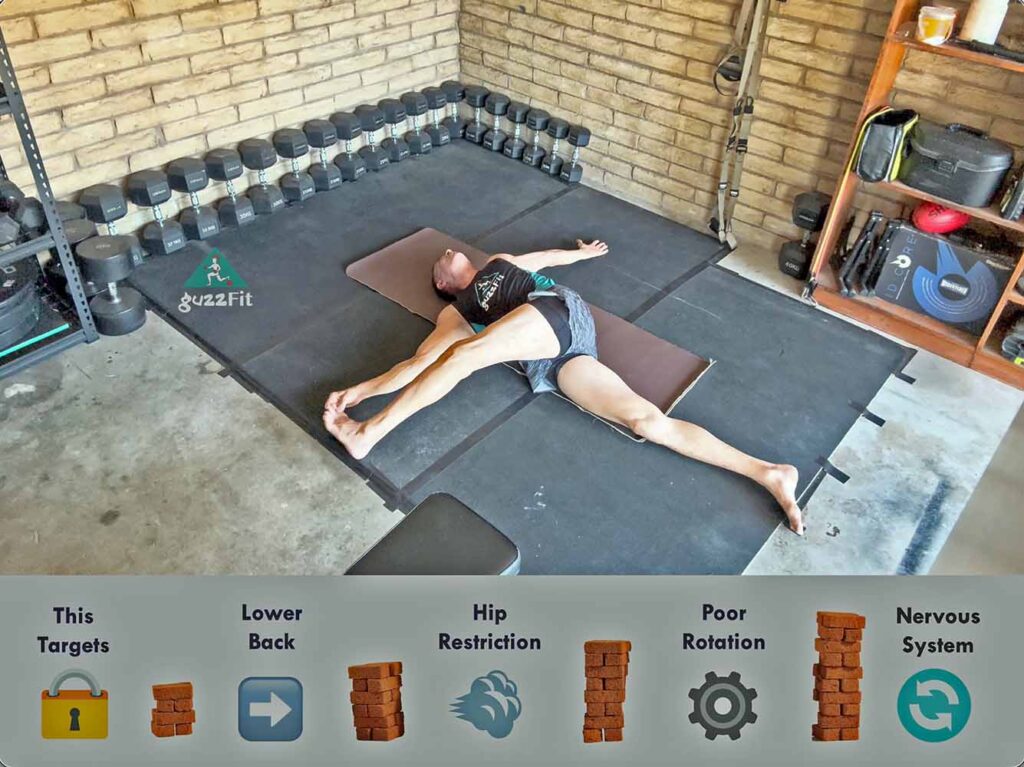
Release hip and lower back tension with structured strength and mobility training that restores joint control and balanced movement. Tightness in these areas rarely appears without contributing factors. In most cases it is associated with prolonged sitting, poor lifting mechanics and imbalanced strength patterns.
What feels structural is often muscular and movement-pattern related.
Relief is rarely found in random stretching alone.
It requires intelligent progression.
At guzzFit , hip and back tension is addressed through structured strength and mobility training that restores movement and builds long-term resilience.
Why Hip and Lower Back Tension Develops
Common contributors include:
• Reduced glute activation
• Tight hip flexors
• Weak posterior chain
• Limited thoracic mobility
• Asymmetrical loading patterns
When these factors combine, tension accumulates in the lumbar spine and surrounding musculature. The body compensates, reinforcing inefficient movement patterns over time.
This is not simply ageing.
It is often the result of deconditioning and restricted movement.
How to Release Hip and Lower Back Tension Safely
Stretching alone may provide temporary relief, but it rarely creates lasting change. To properly release hip and lower back tension, mobility must be reinforced with strength through range.
Structured mobility training aims to:
• Improve joint positioning
• Reinforce active control
• Strengthen through full range
• Restore balanced movement
Mobility without strength rarely holds.
According to Sports Medicine Australia, structured strength and mobility training plays a key role in restoring joint function and reducing lower back discomfort.
Key Strategies That Reduce Tension
Glute Activation
Re-engaging glute function helps reduce lumbar compensation and improves hip extension mechanics.
Controlled Hip Flexor Work
Active mobility drills restore usable range more effectively than passive stretching alone.
Posterior Chain Strength
Romanian deadlifts, hip hinges and rowing variations help improve load distribution through the hips and spine.
Core Stability Integration
Anti-rotation and bracing drills help reduce chronic overload patterns and improve trunk control.
Within a progressive training block, these elements are layered deliberately.
Our 8-week framework ensures strength and mobility evolve together rather than separately.
When to Seek Coaching
If persistent hip or lower back tension is interfering with lifting, sitting, sleeping, or sport performance, the issue often requires an individual assessment rather than guesswork.
Structured coaching identifies the root cause of the problem rather than simply chasing symptoms. Working with a Personal Trainer Traralgon locals trust can help restore balanced movement, improve strength through range, and prevent tension from repeatedly returning.
Move better. Feel stronger. Stay capable.
That is guzzFit .
Ready to experience structured coaching for yourself?
 Book your Complimentary Results Assessment with guzzFit


