Pulling strength training in Traralgon is often overlooked in favour of pressing movements and visible muscle groups.
Yet in performance training, the ability to pull efficiently under load is foundational to posture, shoulder integrity and long-term athletic development.
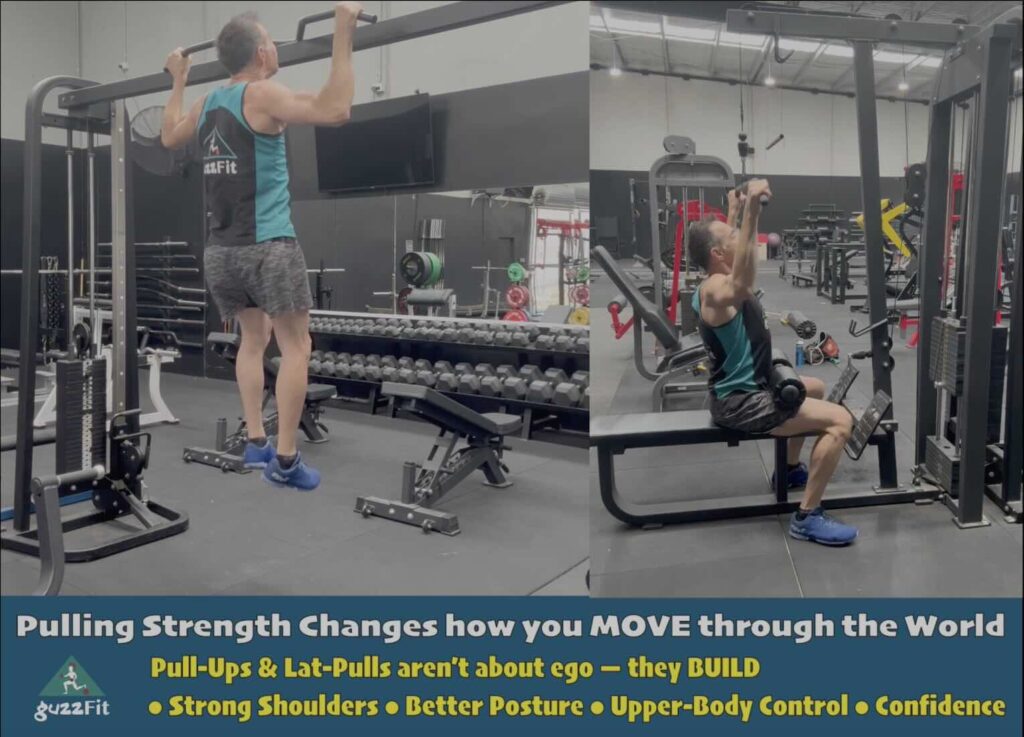
Recently, a session focused on progressive pulling patterns was delivered at Complete Strength Traralgon. Regardless of venue, the underlying programming principles remain consistent. Structured progression is what drives adaptation.
At guzzFit , pulling strength is developed within structured programming that builds posture, control, and performance over time.
What Is Pulling Strength?
Pulling strength refers to the capacity of the posterior chain and upper back musculature to generate force through movements such as:
• Horizontal rows
• Pull ups and chin ups
• Lat pulldowns
• Face pulls
• Deadlift variations
• Rear delt and scapular stability work
These patterns build the musculature responsible for scapular control, thoracic positioning and shoulder health.
Why Pulling Strength Matters for Performance
1. Postural Integrity
Modern lifestyles create excessive anterior dominance. Pulling patterns restore balance by strengthening:
• Rhomboids
• Mid and lower trapezius
• Posterior deltoids
• Latissimus dorsi
Improved scapular positioning enhances overhead mechanics and reduces compensatory stress.
2. Shoulder Resilience
Athletes who press without building adequate pulling volume often develop imbalances.
Structured programming ensures pulling volume either matches or exceeds pressing volume, improving joint integrity and force distribution.
3. Force Transfer and Athletic Output
Pulling strength improves:
• Sprint mechanics
• Rotational power
• Grappling and combat performance
• Olympic lifting stability
• Deadlift efficiency
Force generation begins with stable anchoring through the upper back. Without that, performance leaks energy.
Programming Pulling Movements Correctly
Pulling strength is not built through random volume.
It requires:
• Progressive overload
• Tempo control
• Full range scapular movement
• Variation across planes
• Strategic recovery
In structured coaching environments, pulling patterns are layered within broader performance blocks. Explore how this is applied in our Personal Training Traralgon programs.
Pulling Strength in an 8 Week Progression
Within a defined training block, pulling patterns are progressed deliberately:
• Weeks 1–2: Technical refinement
• Weeks 3–5: Volume accumulation
• Weeks 6–8: Intensity progression
This systematic layering prevents stagnation and supports measurable performance outcomes.
You can learn more about how structured progression drives results within our 8 week training framework.
Final Thoughts
Pulling strength is not aesthetic training.
It is structural, performance-driven training.
When the upper back is strong and controlled:
Movement improves.
Posture stabilises.
Performance elevates.
If you are looking to improve strength and movement quality through structured coaching,


